What should Zeroheight become when file sync stopped being defensible?
As Sketch absorbed the original synchronisation proposition, I worked with the founders to identify a more durable problem: helping teams explain, share, and govern their design systems.
- Product stage
- Pivot
- Connected experiences
- 2
- Product layers
- 4
From synchronisation utility to documentation platform
Maintainers author · teams consume
Assets · guidance · publishing · governance
- 1Sketch absorbs sync
- 2Find the durable problem
- 3Reframe the product
- 4Build the new model
Product pivot · 2017. I worked directly with the founders across product direction, architecture, and interaction design.
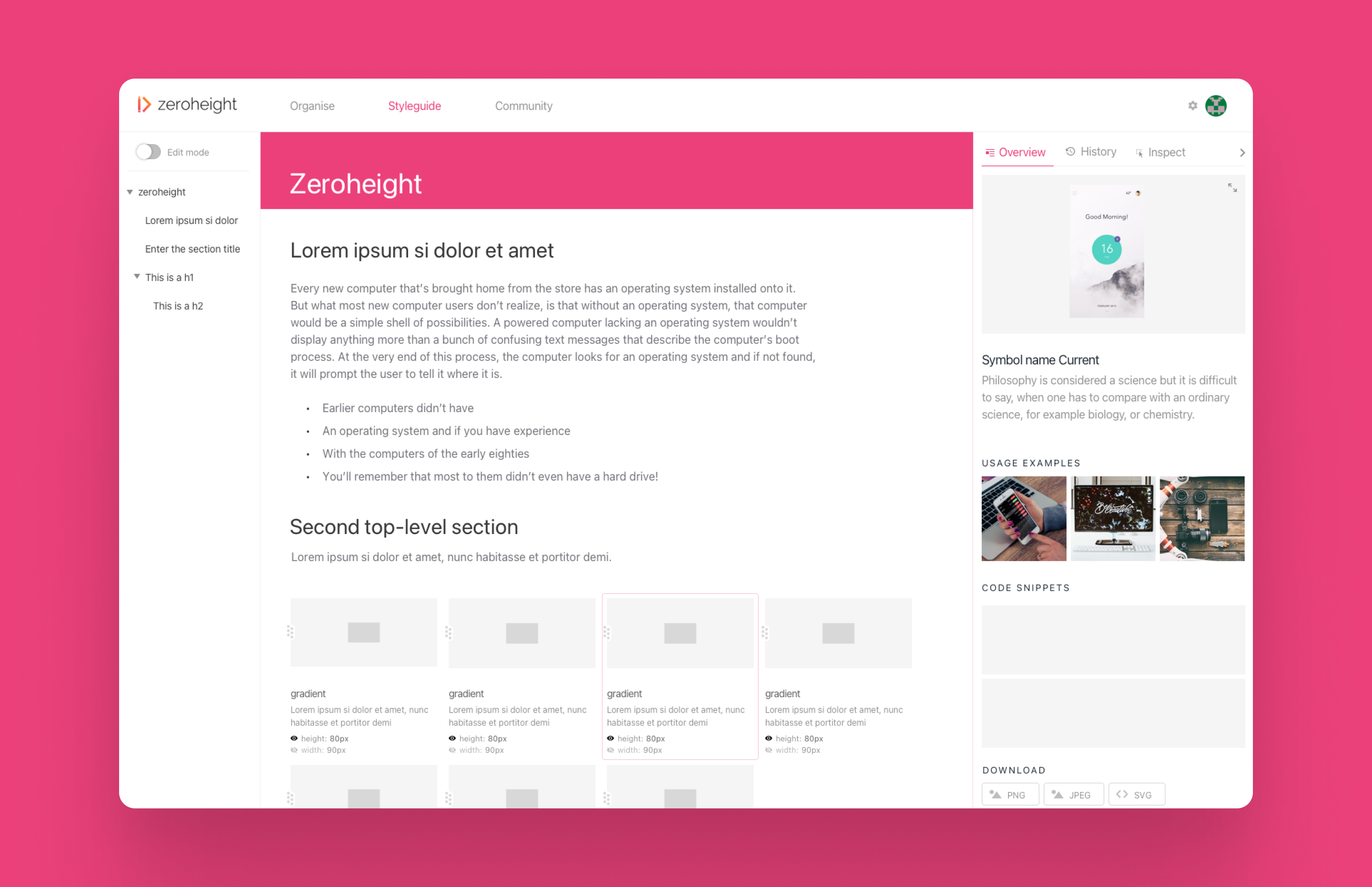
The published experience brought guidance, reusable assets and usage examples into one navigable system.
Could one system serve authors and readers without becoming a CMS?
Maintainers needed flexible authoring and governance. Everyone else needed a clear, searchable source of truth. The architecture connected both without exposing unnecessary complexity.
- Authoring model
- Flexible
- Content model
- Structured
- Published model
- Searchable
Create, group, reorder, and nest sections in context
Guidance and examples attached to system assets
One dependable destination for the wider team
- 1Organise sections
- 2Document components
- 3Add usage guidance
- 4Publish a source of truth
Product architecture · 2017. Direct manipulation kept hierarchy visible while focused tools prevented the authoring experience from becoming a heavyweight CMS.
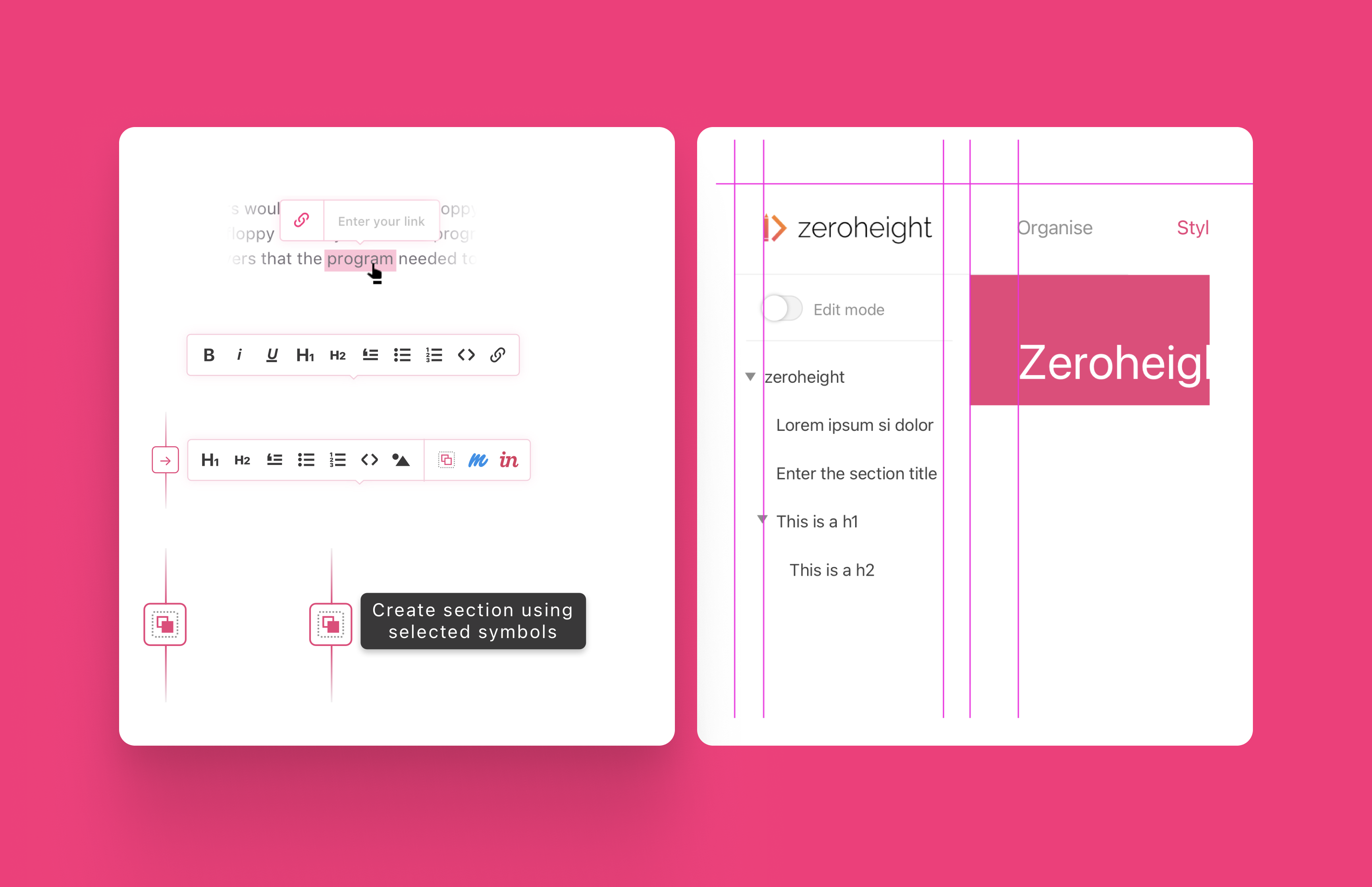
Direct manipulation kept page structure visible: sections, hierarchy and formatting could be changed in context.
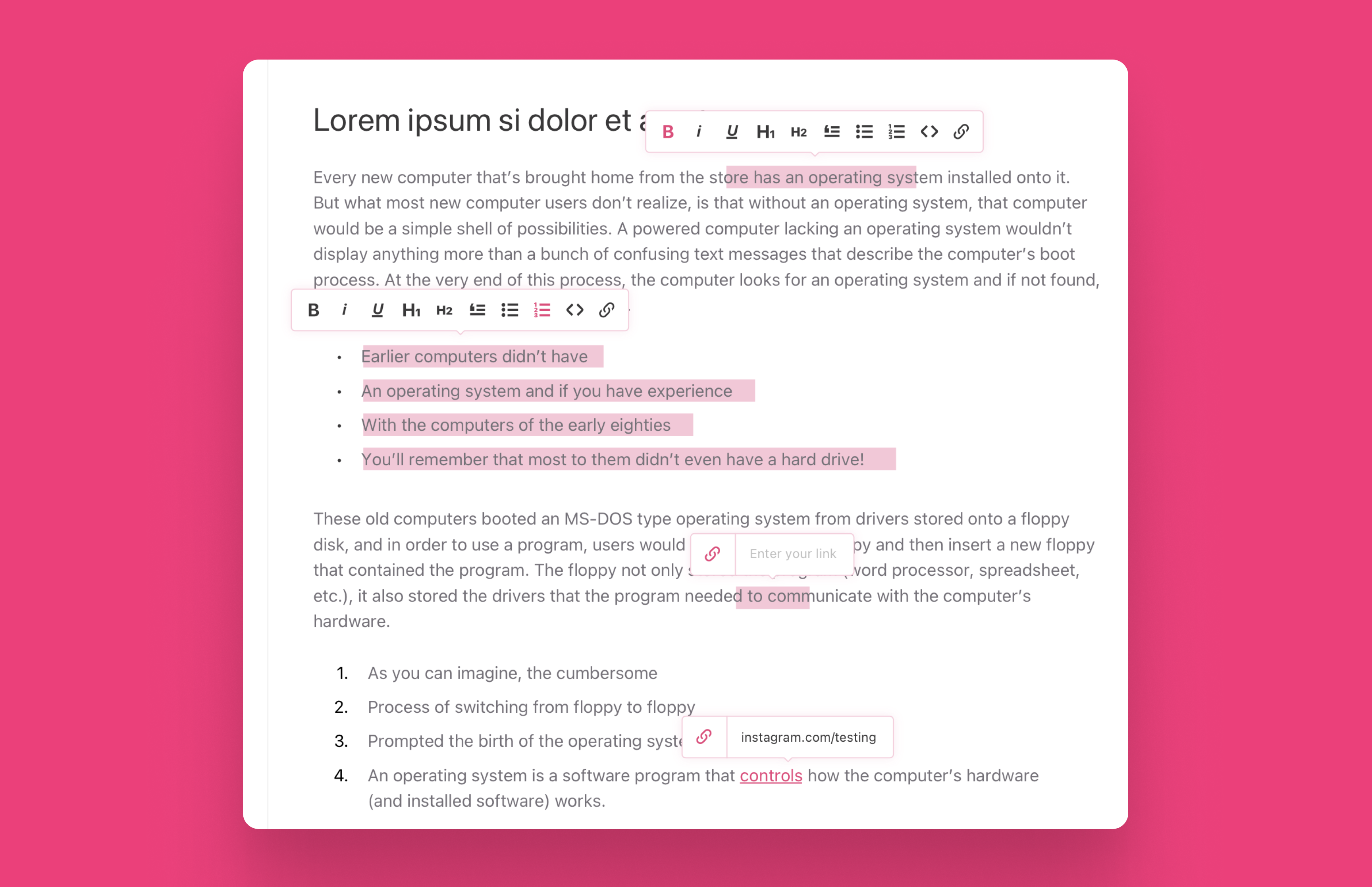
Focused authoring tools supported detailed guidance without turning the product into a heavyweight CMS.
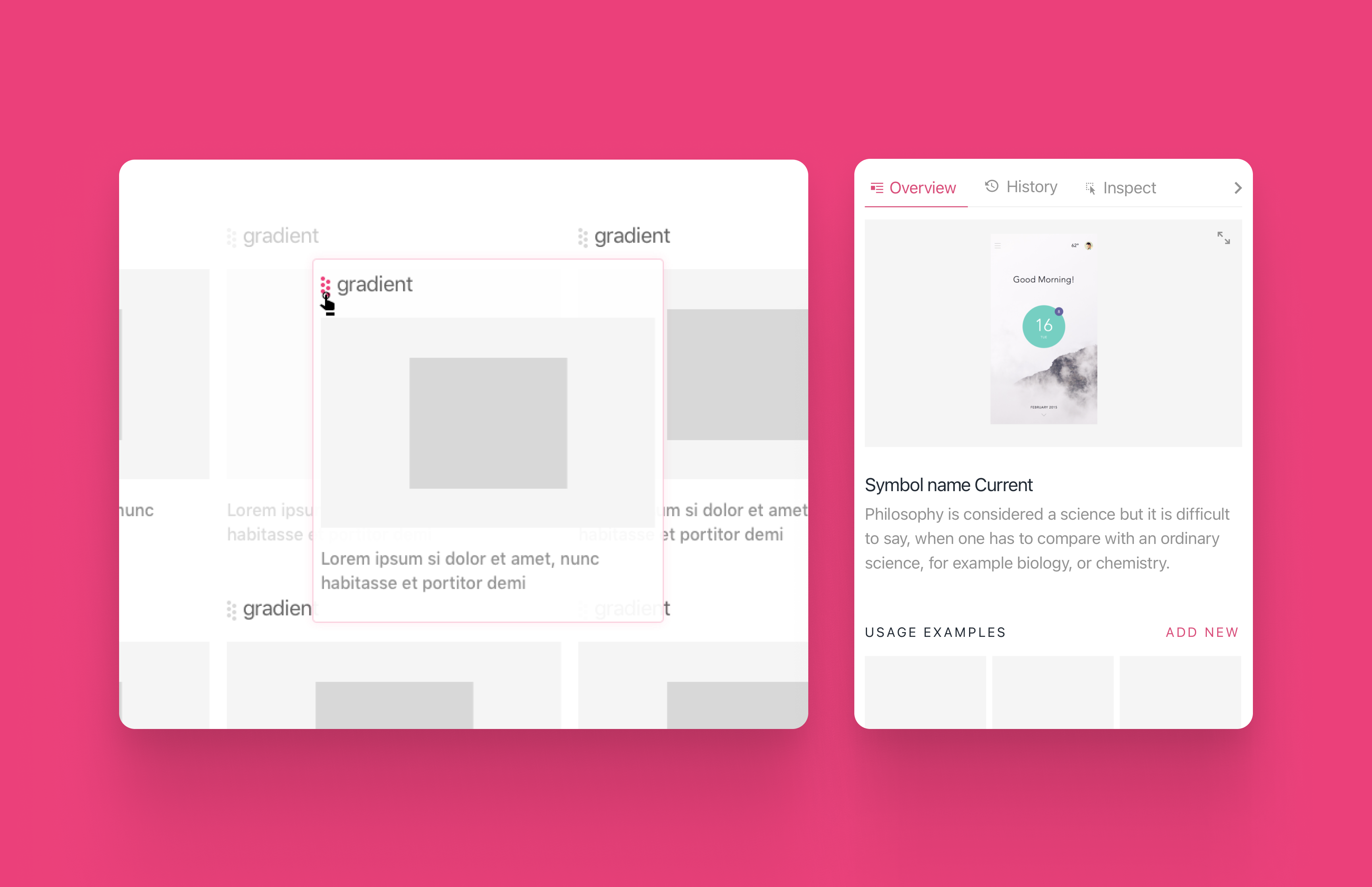
Components became more than visual inventory: maintainers could add the context and examples needed for teams to use them correctly.
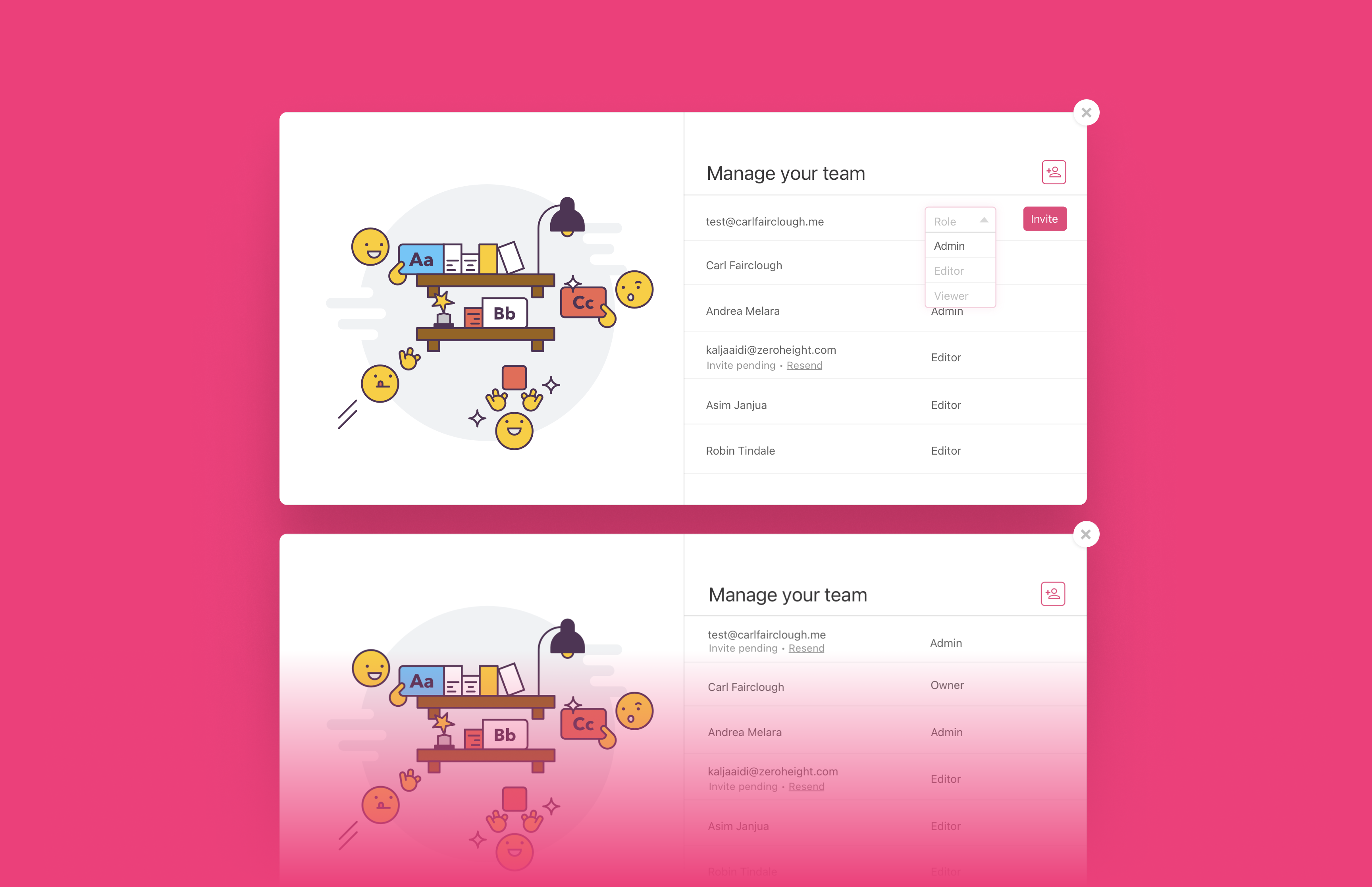
Team roles made governance part of the product rather than an informal process outside it.
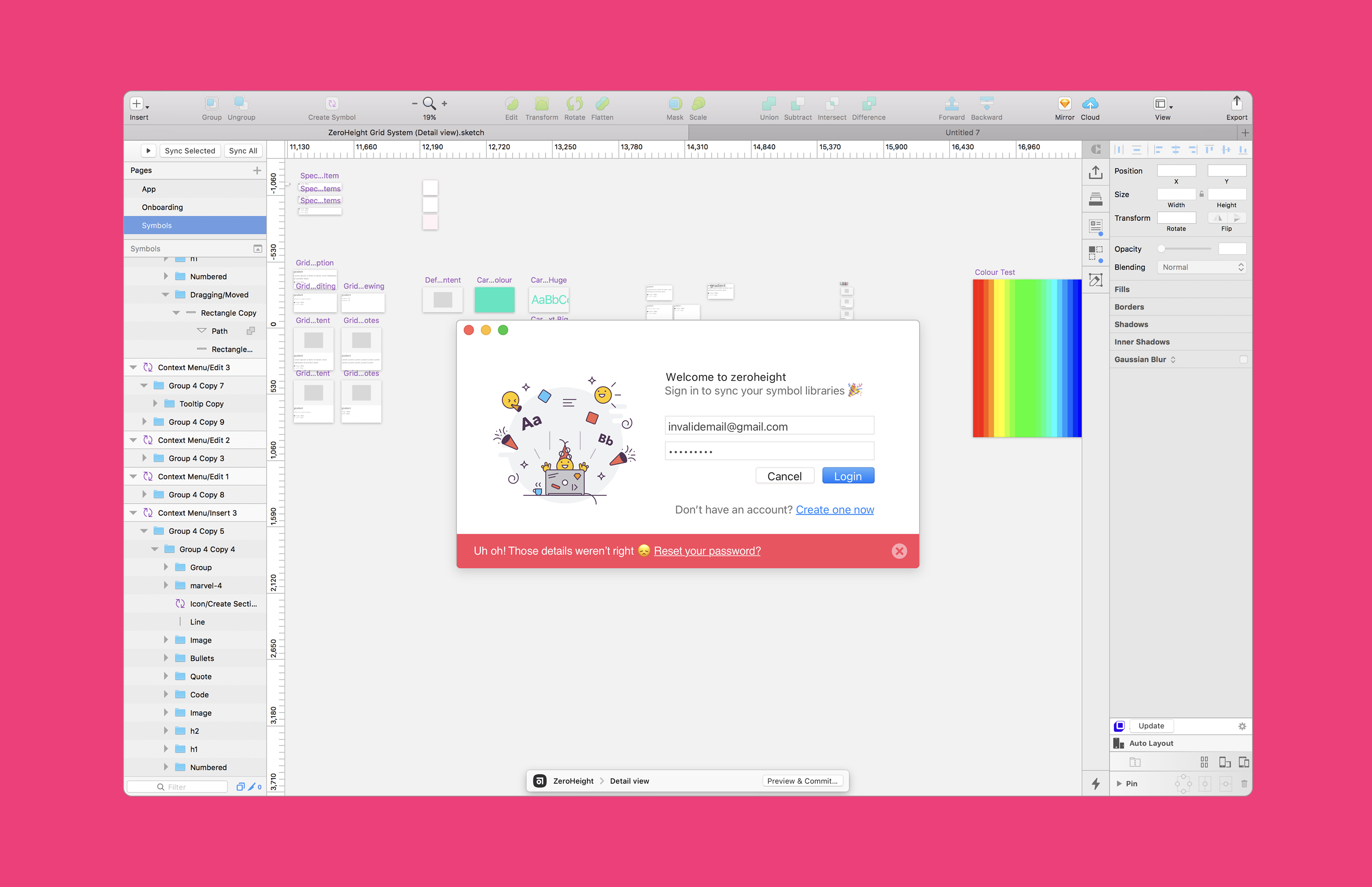
Sketch integration connected the maintained source library to the documentation consumed across the organisation.
Did the pivot create a durable company direction?
The new model took Zeroheight towards early product-market fit and remained recognisable as the platform expanded: synchronised assets, structured guidance, publishing, and governance in one system.
- Product pivot
- 2017
- Later adoption
- Thousands
- Product longevity
- 9 years
Design-system documentation became the core proposition
Teams using the platform
Core architecture remains visible
- 1Synchronise assets
- 2Structure guidance
- 3Publish the system
- 4Govern access
The product model established during the 2017 pivot remains visible in Zeroheight nine years later.