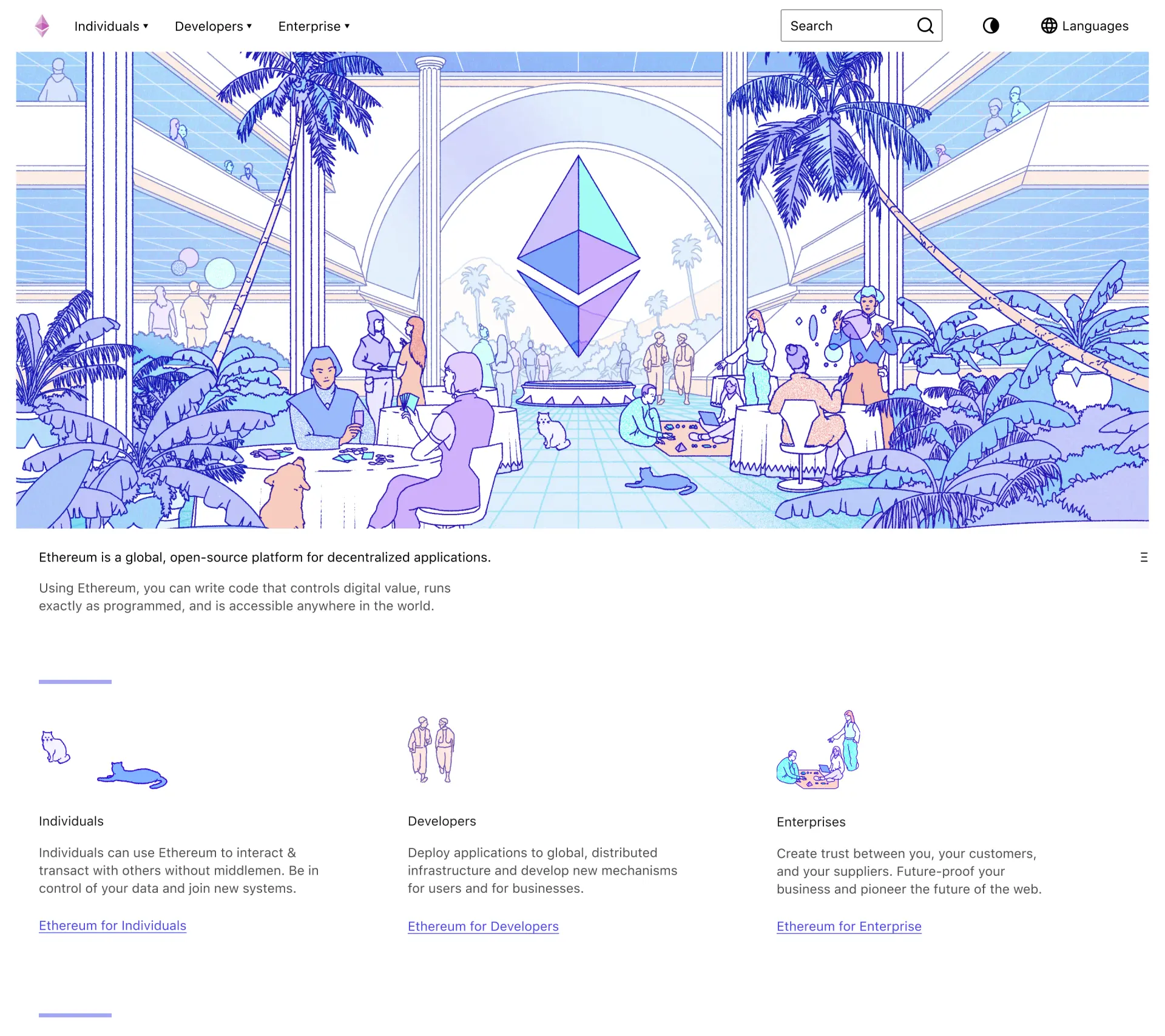
Could a design system make open-source contribution safer?
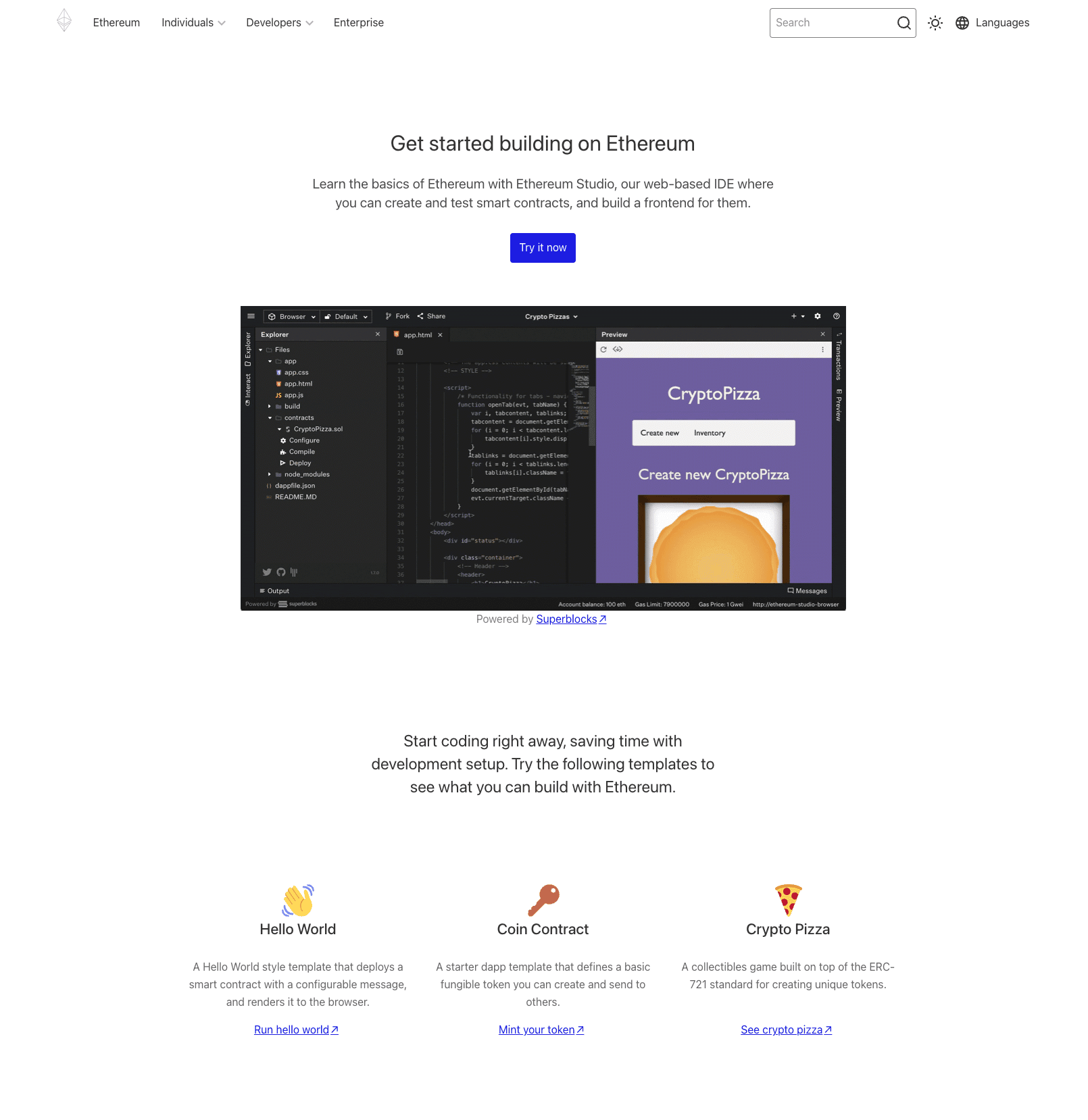
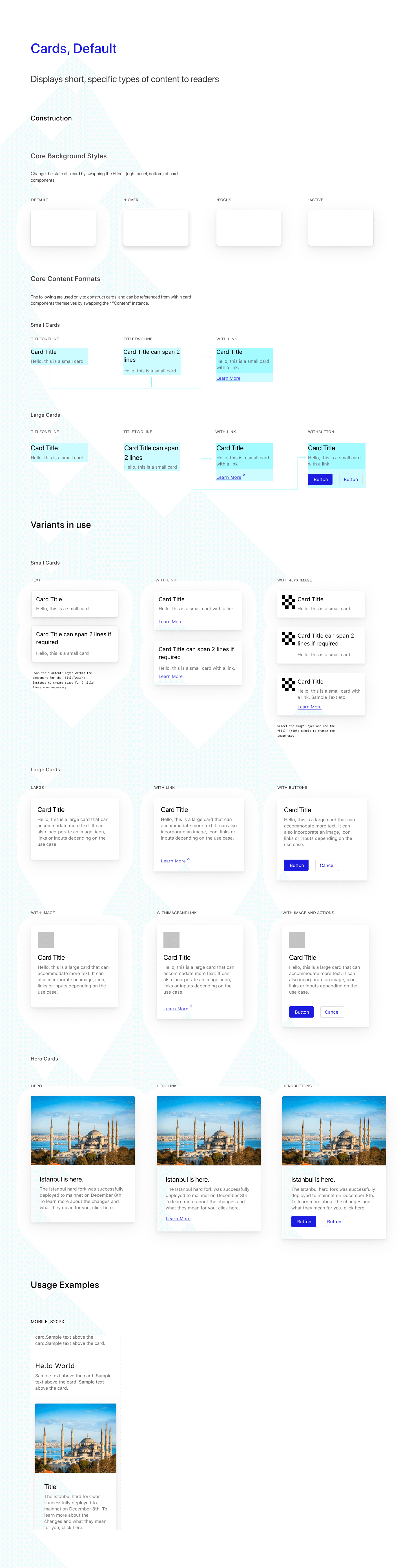
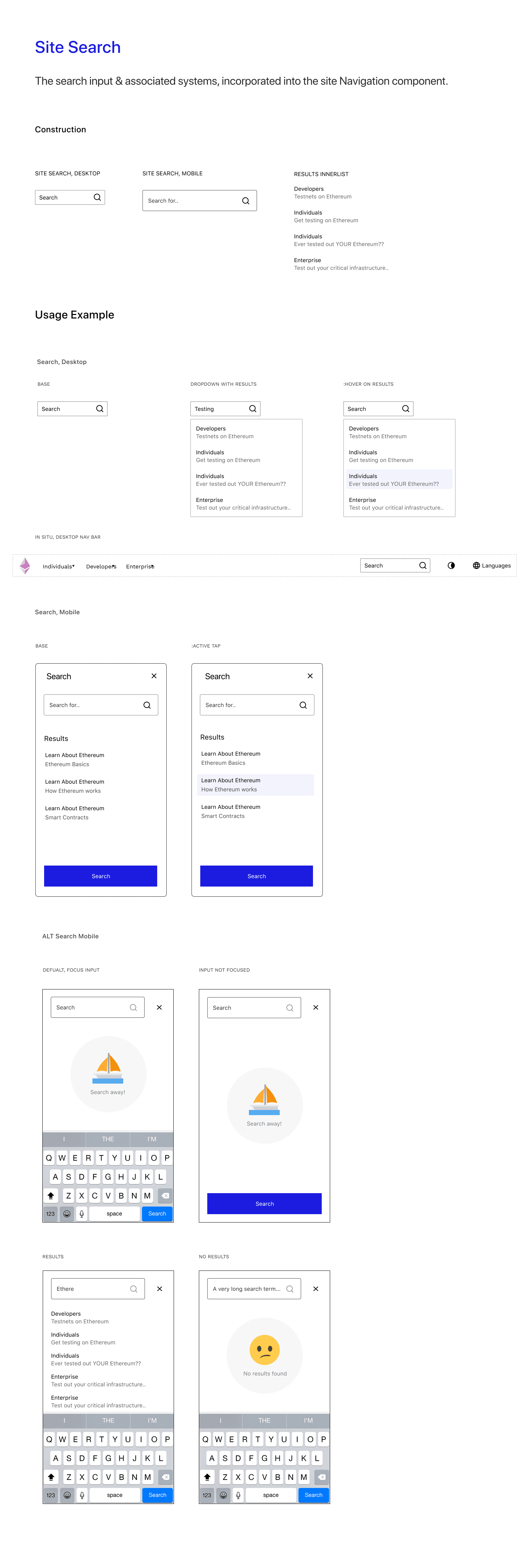
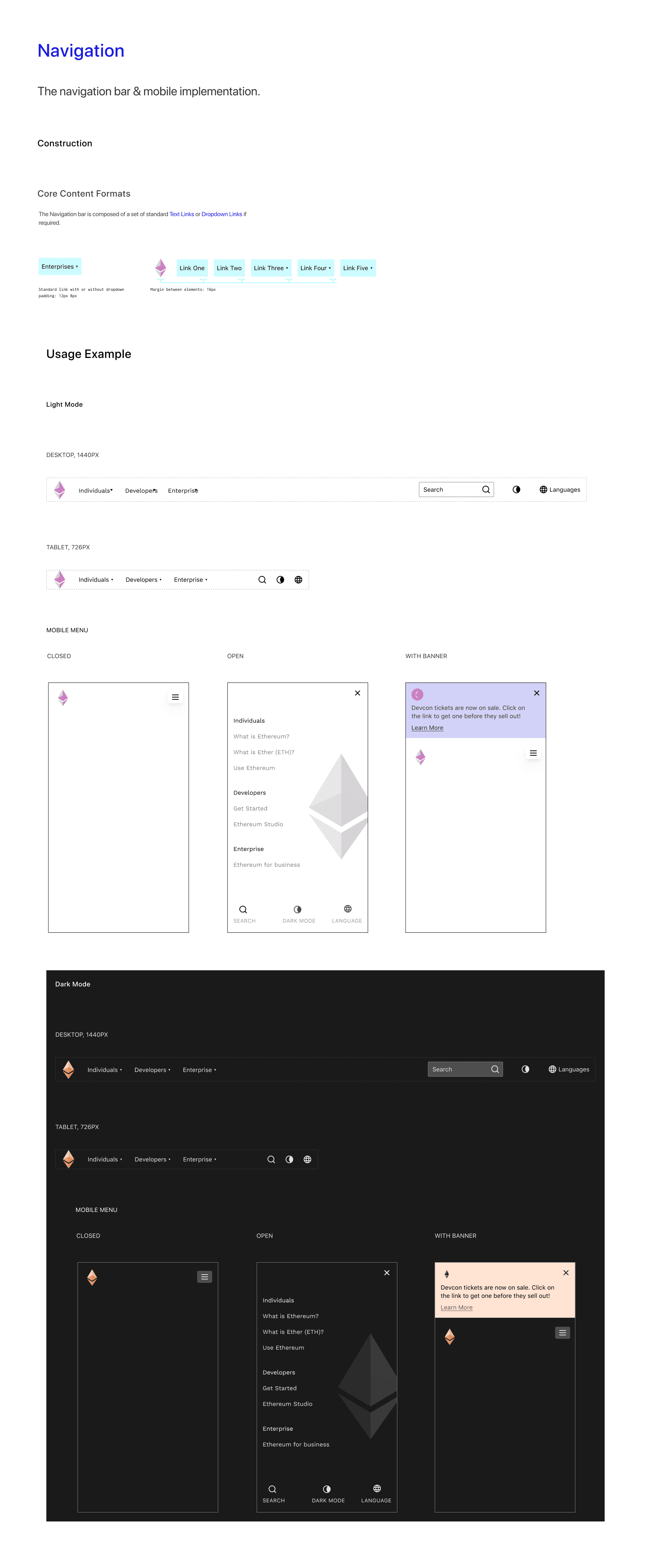
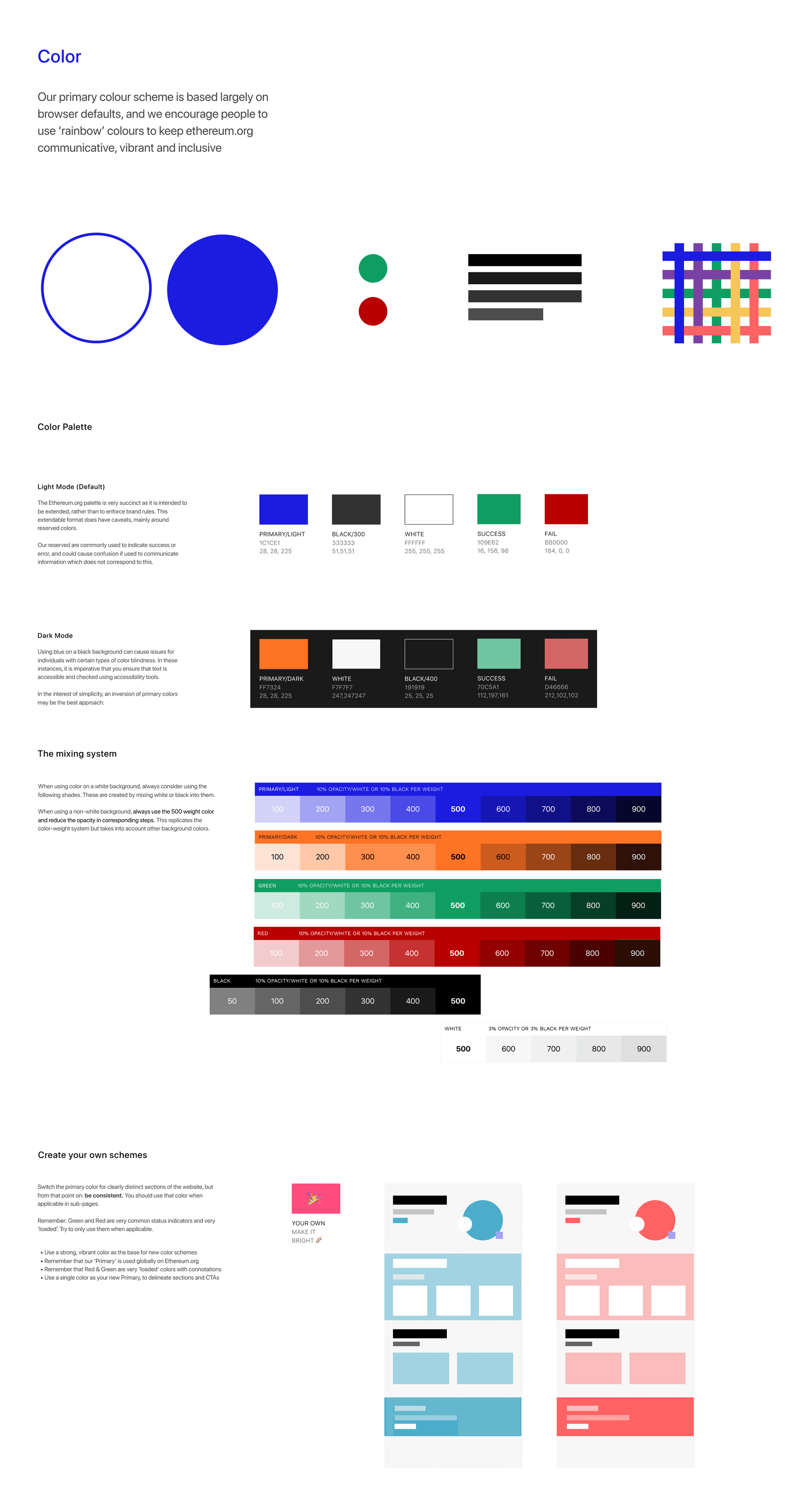
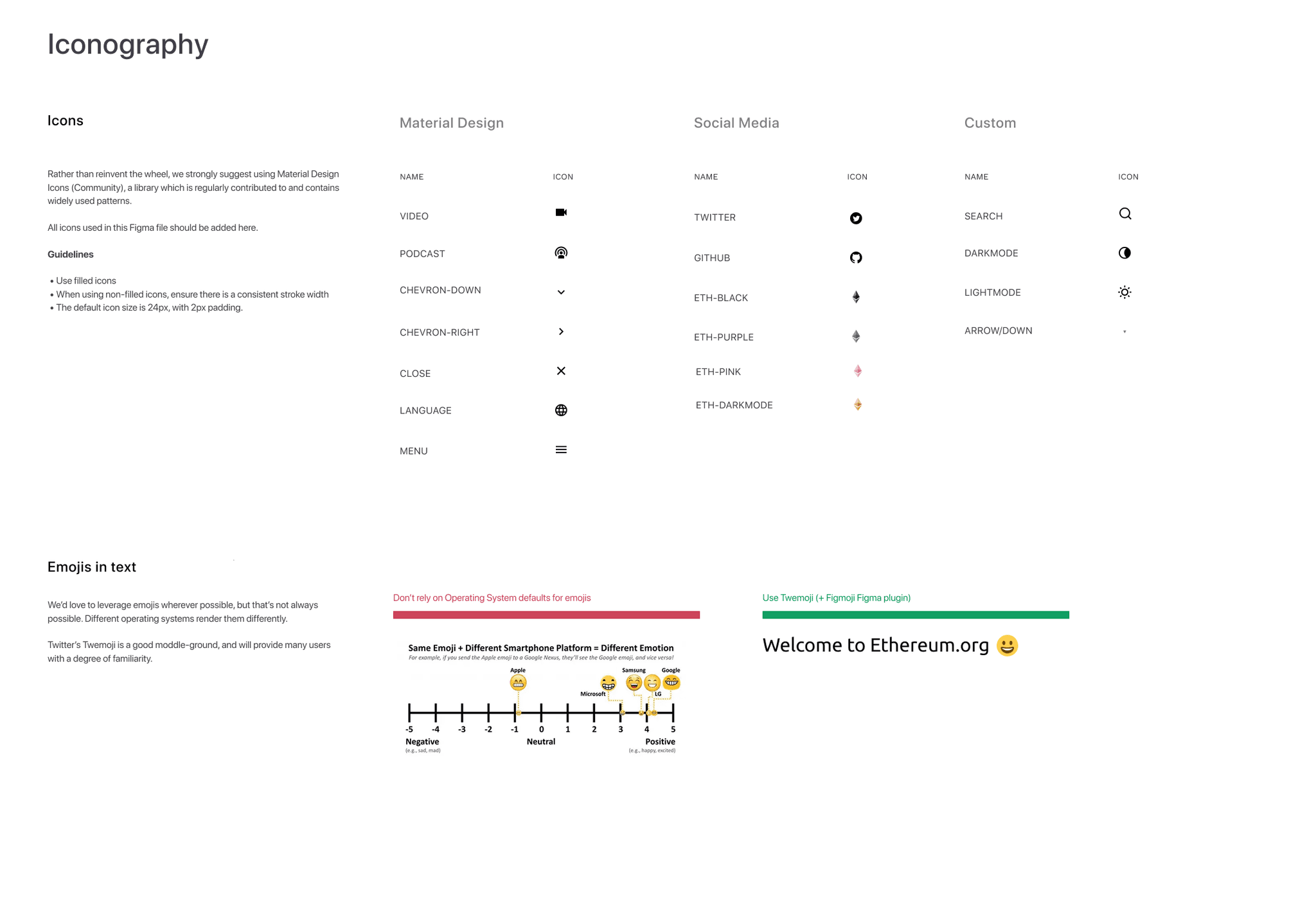
The delivery plan connected principles, visual standards, reusable components, and content authoring instead of treating them as separate projects.
- Principle lenses
- 3
- Design-to-code target
- 1:1
- Authoring model
- MDX
Aspirational · functional · ecosystem
Parity between visual styles and implementation
Reusable components inside contributor-authored pages
- 1Design principles
- 2Visual audit
- 3Component library
- 4MDX contribution model
Delivery scope, November 2019. The visual audit included WCAG accessibility checks; the component library was designed for use across both Figma and the ethereum.org codebase.
How far did the new structure travel?
Overall monthly pageviews rose sharply from late 2019, peaked in May 2021, and remained well above the original baseline through September 2022.
- Monthly peak
- ~4.8m
- Reporting window
- 36
- Period
- 3 years
May 2021
Monthly observations
Oct 2019–Sep 2022
Redrawn from the chart shown in Sam Richards’s Devcon Bogotá presentation. Values are approximate because the underlying analytics export was not available.
Did the contribution model support global reach?
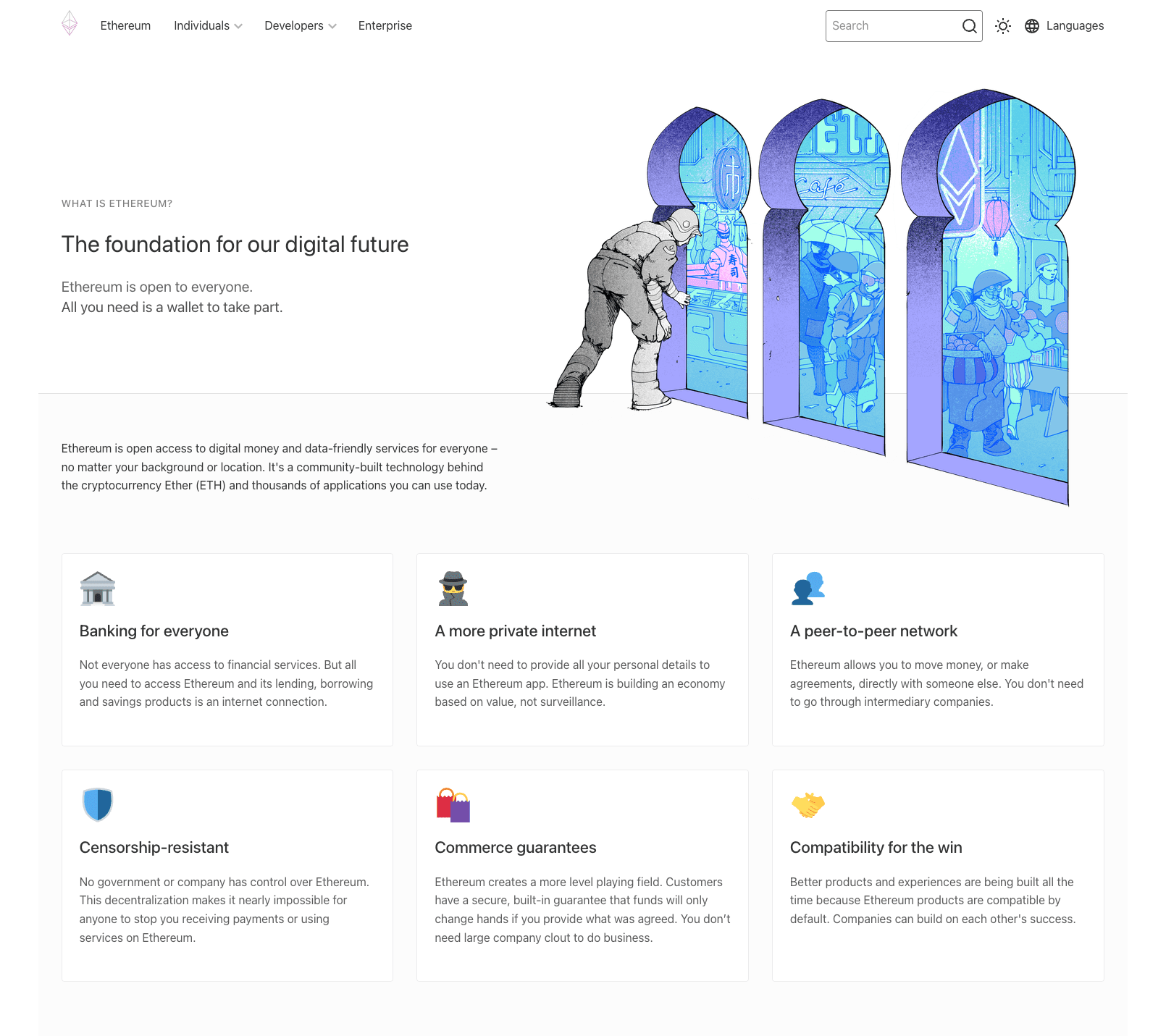
Translated-content pageviews grew tenfold during 2020, while the localisation programme expanded into a distributed contributor network.
- Translated pageviews
- 10×
- Languages
- 30
- Volunteers
- 467
Growth during 2020
Supported by the programme
Across 52 language groups
Redrawn from the chart shown in Sam Richards’s Devcon Bogotá presentation. Values are approximate because the underlying analytics export was not available.